
Four bells, one voice for Saint-Étienne
Hélène-Colette, Julia-Alfreda, Berthe-Marie-Marguerite and Madeleine-Anne-Marie-Catherine: discover the four bells cast in 1950 that make up the peal of Saint-Étienne Church in Beauvais.
Above the rooftops of Beauvais
Built between the 12th and 16th centuries, Saint-Étienne Church combines Romanesque, Gothic and Flamboyant Gothic architecture. Its different construction periods can be seen both outside and inside.
Alongside its rich collection of stained glass, paintings and organs lies another form of heritage: its bells. In the tower, four bronze voices form a tuned ensemble, each bell with its own name, dimensions and note.
All four were cast in 1950 by Les Fils de Georges Paccard in Annecy-le-Vieux. Hélène-Colette, the largest, replaces a bell called “La Commune”, which was lost in the bombing of 1940.
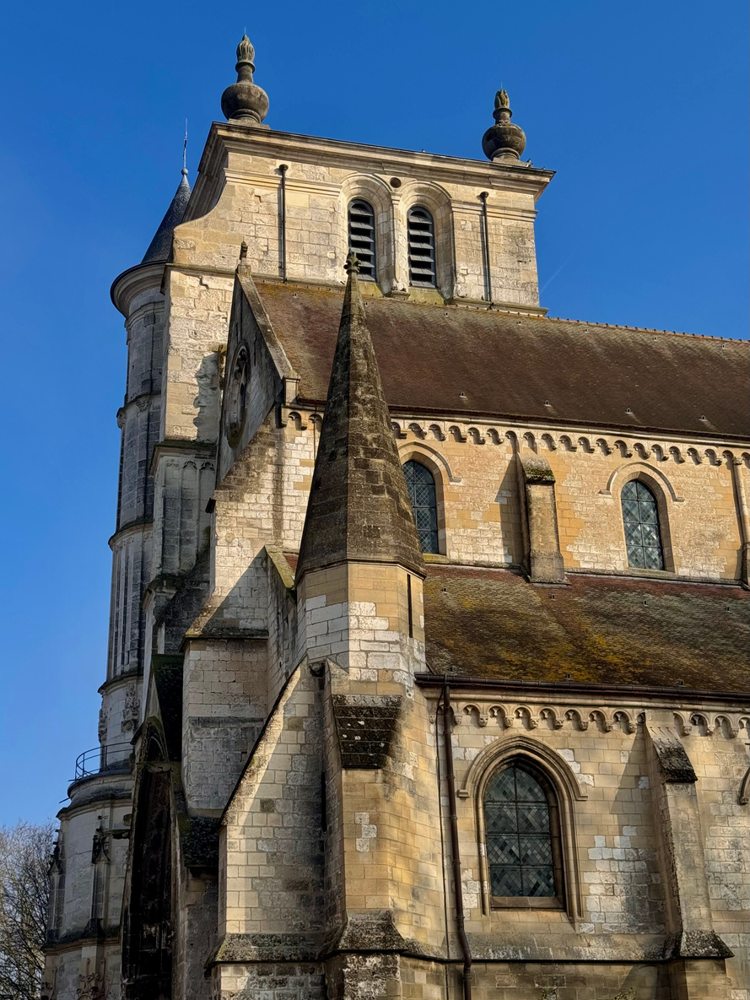
An ensemble cast in 1950
The bells of Saint-Étienne
From the lowest to the highest, the four bells answer one another on the notes C, D, E and G. Their size and weight give each a distinctive presence within the peal.
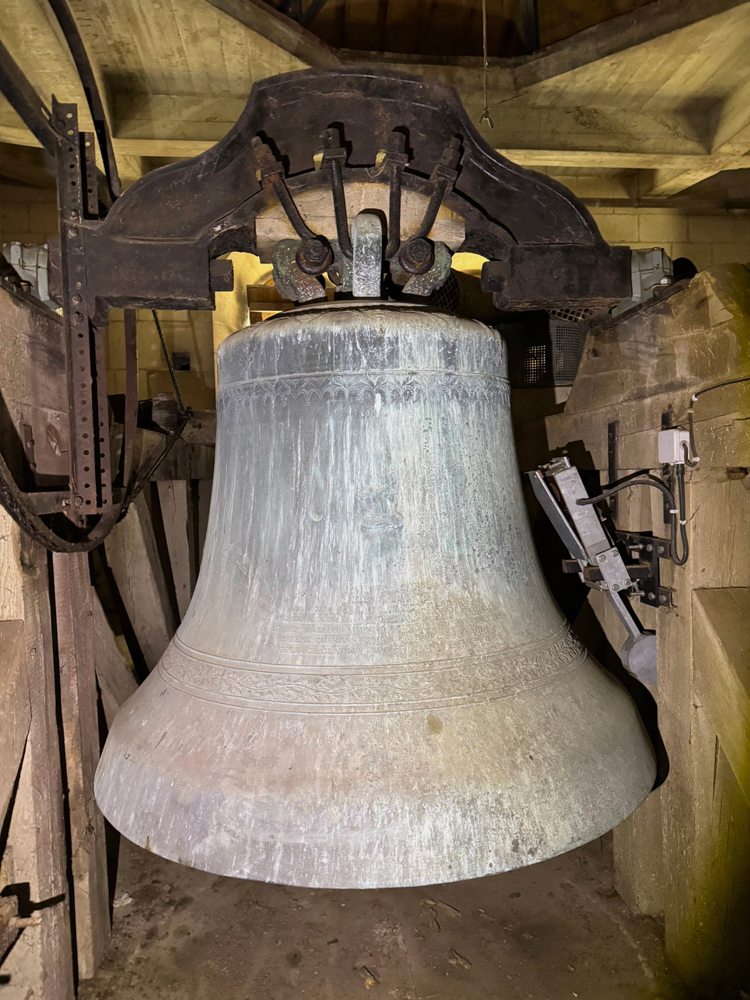 C3
Hélène-Colette
The largest bell in the ensemble stands out for its deep voice. It succeeds “La Commune”, lost in the bombing of 1940: its history thus links the present peal to that of the church before the war.
- Weight: ≈ 2,500 kg
- Diameter: 156 cm
- Cast: 1950
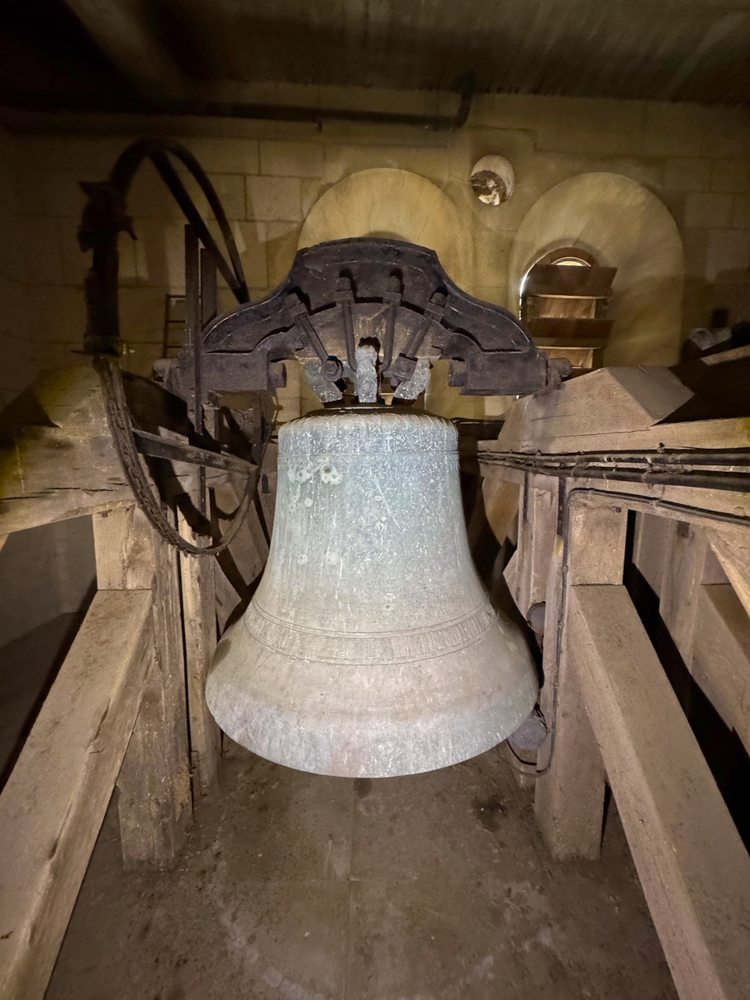 D3
Julia-Alfreda
The second bell in the peal, Julia-Alfreda, adds the note D to the ensemble. The article describes figurative designs and scrolling foliage on this bell, as on the others, together with the names of its ceremonial godparents.
- Weight: 1,500 kg
- Diameter: 136 cm
- Cast: 1950
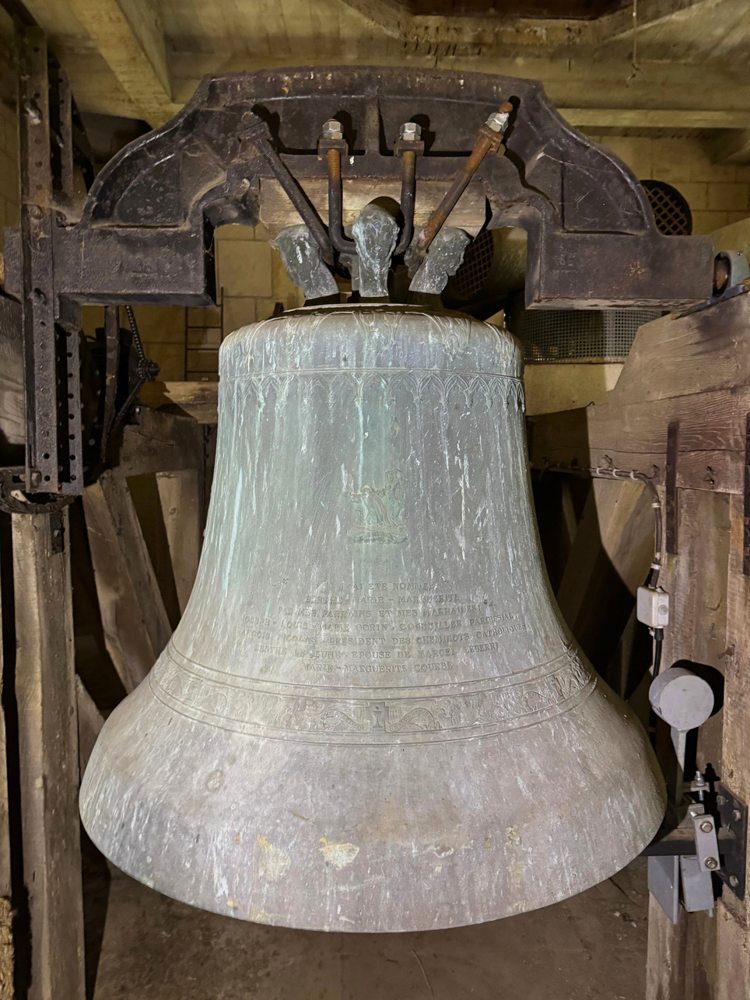 E3
Berthe-Marie-Marguerite
The third bell, Berthe-Marie-Marguerite, sounds the note E. Le Sonneur du Nord’s article identifies it as the bell used for the Angelus, recalling the role of bells in the rhythms of local life and the church’s religious practices.
- Weight: 1,150 kg
- Diameter: 120 cm
- Cast: 1950
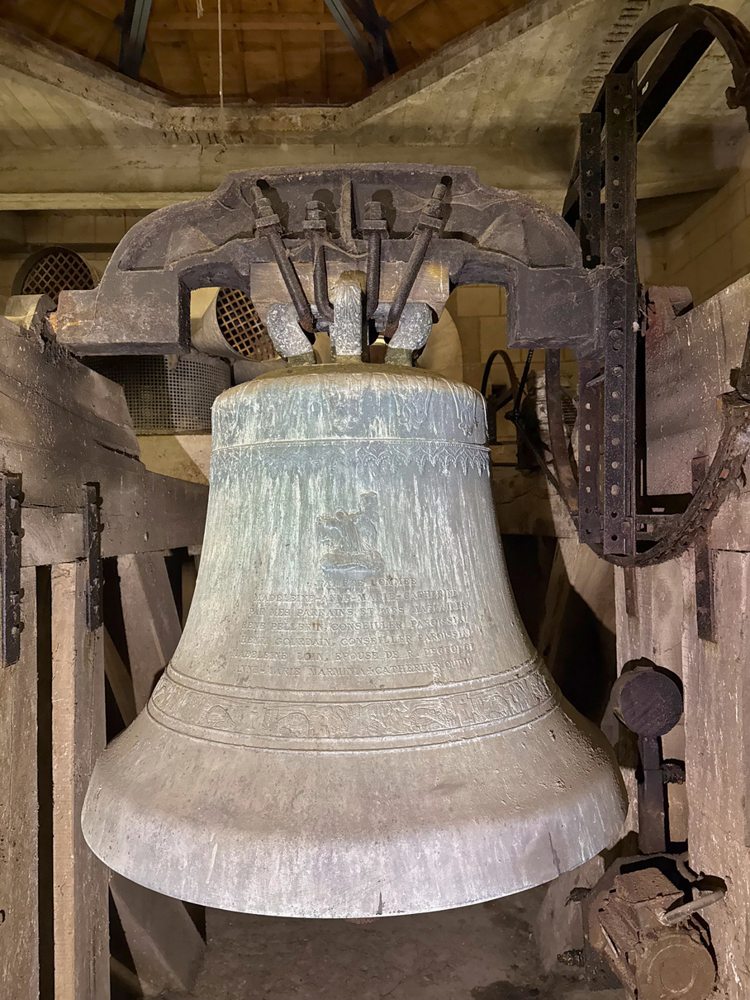 G3
Madeleine-Anne-Marie-Catherine
The smallest bell of Saint-Étienne also has the longest name. Its note, G, is the highest of the four and completes the chord formed with its three neighbours.
- Weight: 650 kg
- Diameter: 100 cm
- Cast: 1950
Photographs of the four bells: reproduced from the article “Beauvais – Église Saint-Étienne”, Le Sonneur du Nord. Weights and dimensions are given according to the information supplied.
C, D, E, G: the “Salva Nos” pattern
The four notes of the peal form a pattern known as “Salva Nos”. Here, this name describes the ensemble’s chord and characterises the musical relationship between the bells.
Listening to the peal means distinguishing these four voices, from Hélène-Colette’s low C to Madeleine-Anne-Marie-Catherine’s G, then hearing how they blend.
| Bell | Note | Weight | Diameter |
|---|---|---|---|
| Hélène-Colette | C3 | ≈ 2,500 kg | 156 cm |
| Julia-Alfreda | D3 | 1,500 kg | 136 cm |
| Berthe-Marie-Marguerite | E3 | 1,150 kg | 120 cm |
| Madeleine-Anne-Marie-Catherine | G3 | 650 kg | 100 cm |
Discover the peal on video
Continue your discovery through sound: the video below invites you to listen to the bells of Saint-Étienne Church in Beauvais.
Sources and documentation
This presentation draws on the article “Beauvais – Église Saint-Étienne” by Le Sonneur du Nord, supplied to the Association Beauvais Cathédrale, together with the specifications and chord pattern provided for this page.
The photographs of the bell tower and bells are reproduced from that article. The video is embedded from YouTube.